
Media + Exhibitions


Grinnell Crossroads

Grinnell College

October 2020


Waking the dragon

12 Stars Media

April 2020

 
For our fifth annual Gothamitis lecture, we hosted landscape architect and MacArthur Genius Walter Hood in conversation with WNYC reporter and host Arun Venu...
 

Three Trees: Jackson, Obama, Washington

Chicago Architecture Biennial

2019


Double Sights installed at Scudder Plaza

Princeton University

October 2019


Conversation with Amanda Williams, Andres L. Hernandez, and Walter J. Hood

A Way, Away (Listen While I Say)

Pulitzer Arts Foundation

May 2017
 

How Artists Contribute to Conversations about Civil Rights

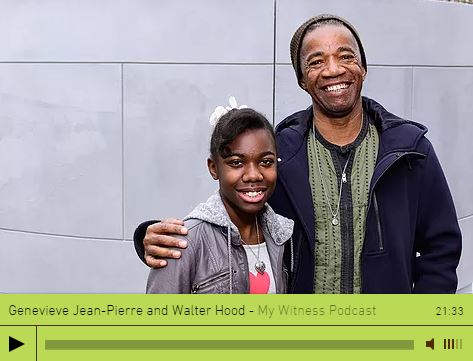
"My Witness" Podcasts

February 2017


LAEP LECTURE: WHY BLACK LANDSCAPES MATTER MONDAY, 11/28/16 5:00PM – 8:00PM 112 WURSTER HALL 4 Reception: 5:00pm to 6:00pm Lecture and Discussion 6:00pm to 8:00pm During these dynamic and turbulent times the urban landscape has become the proscenium for the critic of daily life…the backdrop for our actions and passivity towards poverty, race, and class. Of particular focus and under threat are landscapes that African Americans have inhabited during most of the 20th century…These are “black landscapes”; the built and cultural detritus that remains from a 20th century of progress that transformed black lives from rural to urban and from working class to middle class. Cities that where once cultural meccas lay fallow and undernourished during the last 35 to 40 years as we have seen an assault on social and environmental equity, public advocacy and an increase in the incarceration of young African Americans. The four cities that we will discuss include New Orleans (11 years post Katrina), Charlotte NC, Milwaukee WI and Detroit MI. These case studies will be discussed through the lens of landscape, examining the deficiencies and the normative portrayals of the language of landscape.

Black Landscapes Matter Lecture Series

UC Berkeley

November 2016

 
Monday, October 10, 2016 Walter Hood Response by Kate Orff Walter Hood is an Oakland, CA-based designer, artist and educator. He is a professor at the University of California, Berkeley's landscape architecture and environmental design department, which he chaired from 1998 to 2002.

Why Black Landscapes Matter

Columbia GSAPP

October 2016


10 Parks That Changed America

Public Broadcasting Service (PBS)

April 2016

 
Current Work Walter Hood, Hood Design Studio Recorded: December 2, 2014 Walter Hood established multi-disciplinary, Oakland-based Hood Design Studio in 2003 with a focus on the urban public realm and a commitment to creating environments that reflect their place and time. Arguing “the park really doesn’t have any power anymore,” Hood takes a critical stance against the typologies of traditional landscape architecture and environmental design and asks: “Can we stop talking about types…and talk about people’s relationship to things and places?" Guided by this emphasis, he creates richly layered and functional landscapes designed in collaboration with local communities and reflecting the needs of their users. Hood’s work often reveals the artifice of seemingly natural environments, and the title of his lecture, “Conscious/Unconscious Landscapes,” expresses the contention that “in our landscape today, everything is hybridized.” In surveying more than a dozen of his firm’s projects, from temporary interventions to large-scale commissions, Hood demonstrates the range and scope of his innovative work. He also details process and methods that encompass research of ecological history, sociological study of the environment prescribing behavior, and oral history interviews. Working at the intersection of art and design, the urban transformations presented include the revitalization of Ali Baba Avenue in Opa-Locka, Florida as a pedestrian-oriented corridor, the activation of Pearl Street Alley as a gathering space in Philadelphia, and the “Witness Walls” installation in Nashville that honors the city’s role in the Civil Rights movement. Hood further walks through significant landscape commissions for the grounds of the de Young Museum in San Francisco’s Golden Gate Park, the Solar Strand array of photovoltaic panels at the University of Buffalo, and the garden of the newly reopened Cooper Hewitt Museum in New York City. Following the lecture, Hood sat down for a conversation with architect and urbanist Michael Sorkin of Michael Sorkin Studio to discuss reliance on “one size fits all” solutions in the profession, the value of social practice art, and why investment in urban edges matters. The Current Work series invites significant international figures who powerfully influence contemporary architectural practice and shape the future of the built environment to present their work and ideas to a public audience.

Walter Hood: Current Work
The Architectural League of New York

Cooper Union, NYC

December 2014

 
Walter J Hood, Principal, Hood Design, presented Improvising within the Seams of Practice as part of the Fall 2012 Student Lecture Series on Thursday, October 18, 2012, 6:00 PM in Cascieri Hall. Sponsored by BAC Atelier Video by Matt Gelineau

Improvising within the Seams of Practice

Boston Architectural College
Boston, MA

October 2012

 
Walter Hood is a Professor at the University of California, Berkeley's Landscape Architecture and Environmental Design Department. His studio, Hood Design, has been engaged in architectural commissions, urban design, art installations, and research since 1992. ------------------- TEDxBerkeley 2011 - Engaging the World - took place on Saturday, February 19th, 2011 at UC Berkeley.

Find the Rivers
TedXBerkeley

UC Berkeley

February 2011


Open Space as Common Ground

Headlands Center for the Arts

April 1994

 
With Austin Allen's permission, please find a link to view Austin's excellent film, "Claiming Open Spaces". The documentary film addresses city parks in Columbus, New Orleans, Detroit, Oakland, and Montgomery, and the African-Americans who frequent them. Public spaces, and the ways in which we use them, sometimes conflict with official city planning.

Claiming Open Spaces

Austin Allen

1996