
Welcome to Under the Hood.
Let’s explore the creative ideas driving the studio
Earlier this year, TIME magazine named Walter Hood one of the 100 Most Influential People of 2026. To mark the occasion, we spoke to Walter about the concept of TIME, exploring questions of temporality, memory, and erasure.
PHOTOGRAPHY: Peter Prato
“How do you embed seeds that allow for a landscape to become something that’s bigger than where you started?”
Spectators stand on the banks of the Buffalo Bayou to witness a baptism.
PHOTOGRAPHY: University of Houston Digital Library
“I want the bayou to be this thing that people see in a completely different way.”
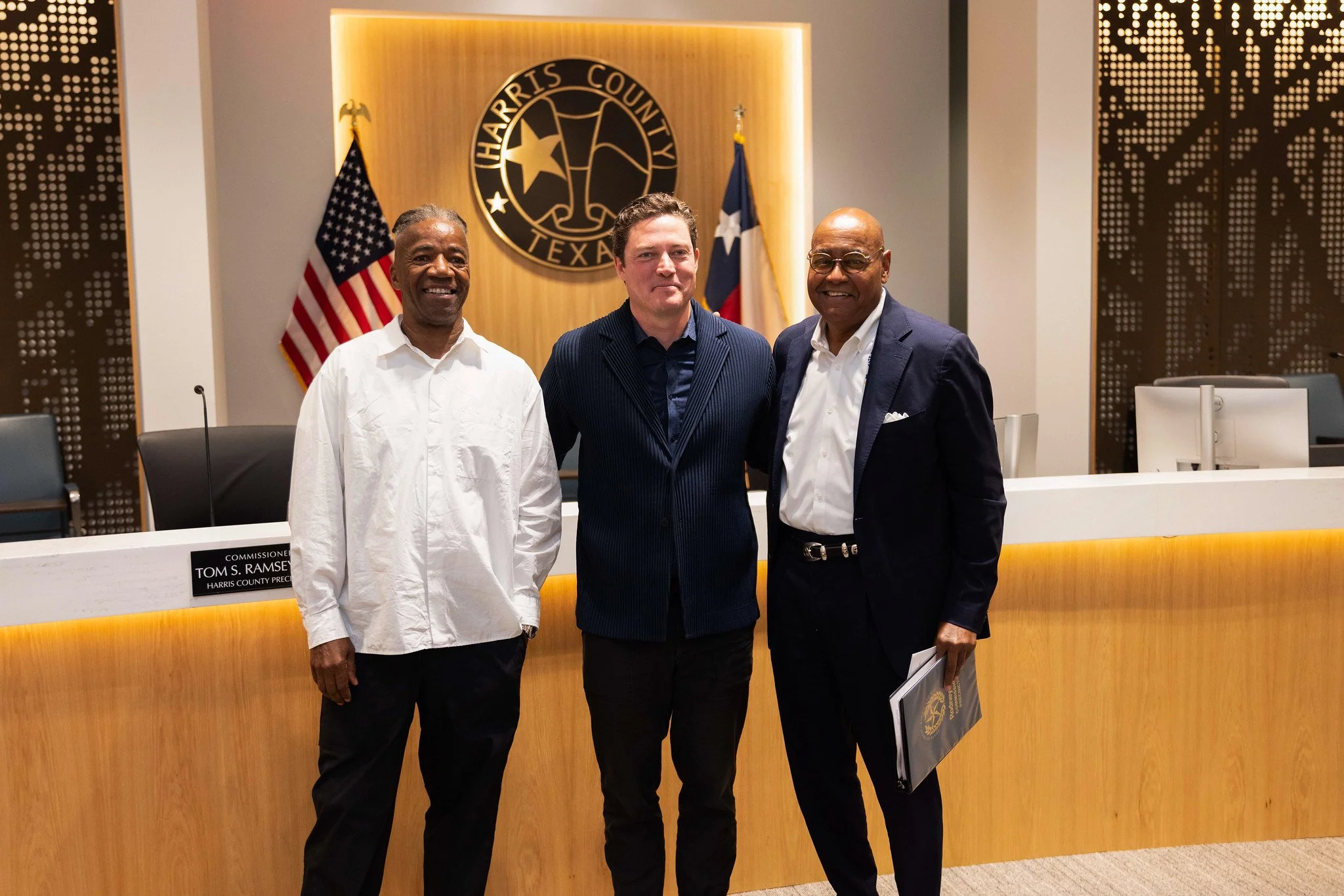
Walter, Michael, and Commissioner Rodney Ellis at the design concept unveiling for Remembrance Park.
PHOTOGRAPHY: Harris County Precinct One
BAYOU PASTS + FUTURES
WALTER HOOD, Founder + Creative Director
History is the context for how I think about time and temporality. I’m constantly looking backwards and looking forward, which produces a tension in how I situate myself as a person of color in this country. I was born at this intersection of time where there is a very clear distinction between before and after civil rights. This creates a dialectical interplay between the contradictions of time and gives my life a structure, which I never thought about until I started making projects and putting art out in the world.
I was raised in a Southern landscape, which was less about following a logical clock and more about “good times” and “bad times,” like those old African proverbs. Being part of a community gave me the sense of always looking back, always looking forward — a concept that’s always been a part of the African Diaspora. My work has always been about that.
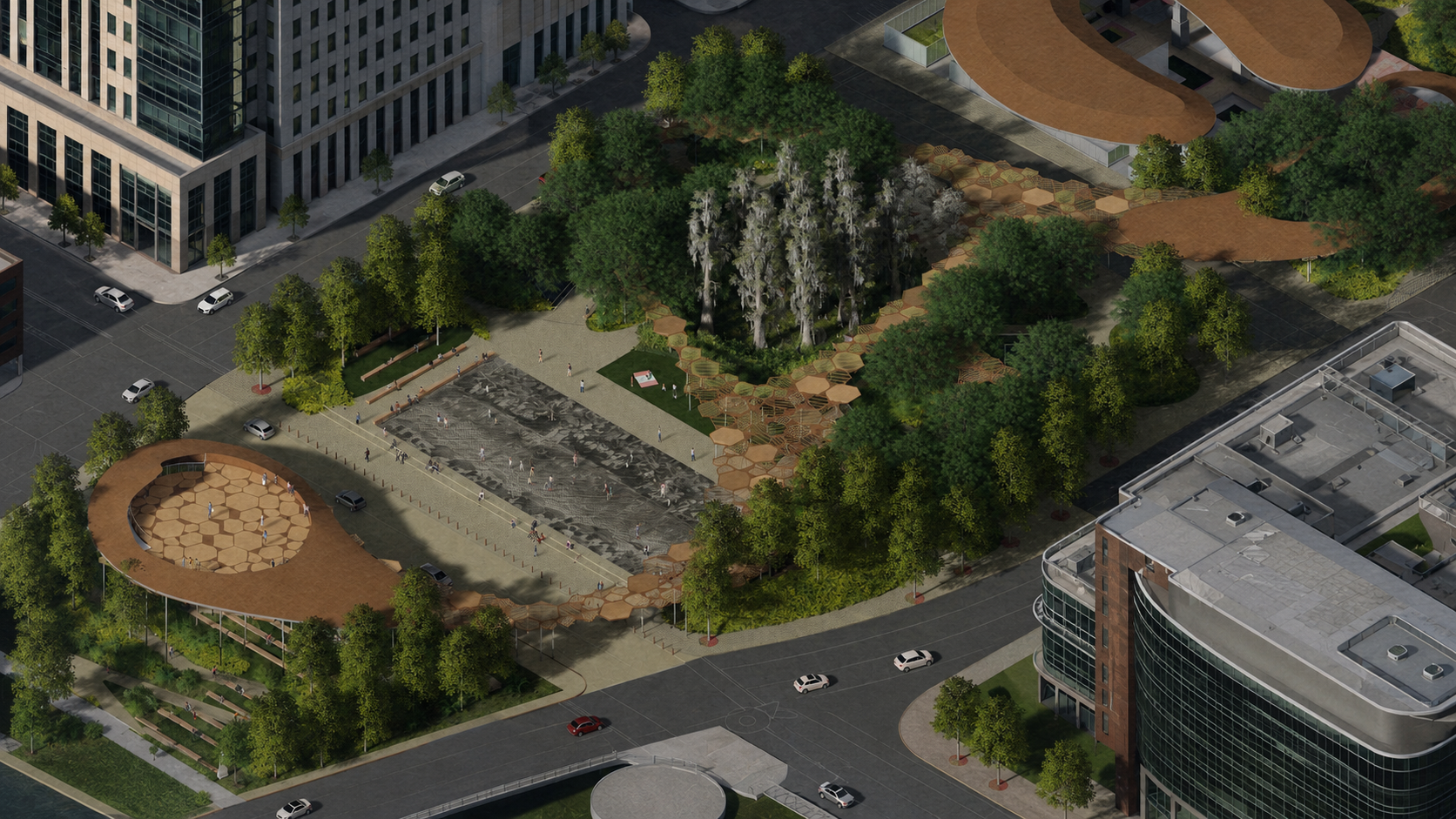
I use the term dialectic. It allows me to mix things up, to escape the linear way we think of time. We are working on Remembrance Park in Houston, Texas with AMMA, led by Michael Murphy. It’s located along the Buffalo Bayou, the lifeblood of the city, the site is also next to a jail — an alienating, carceral landscape.
In our research, we found these 20th-century photographs of African Americans on the banks of the Buffalo Bayou getting baptized. To me, that’s a very powerful image of the past, but it’s also a valuable image of the present. It reminded me of Toni Morrison’s quote, “All water has a perfect memory and is forever trying to bet back to where it was.” This is true in landscape — in flood plains you can take the water out, but the water will always return.
At its core, Remembrance Park is about remembering honestly and carrying that memory forward. Its mission is to promote understanding of the legacy of enslavement, oppression, and freedom movements in the United States; connect those legacies to continuing inequities; and inspire a common commitment to building a fairer and more equitable future.
Through Remembrance Park, our goal is take a simple act of collecting water and give back a revelatory moment where people go, “Ah, I’m in the bayou.” Old histories, reclaimed memories will manifest over time: early churches in the woods or hush harbors draped in moss.
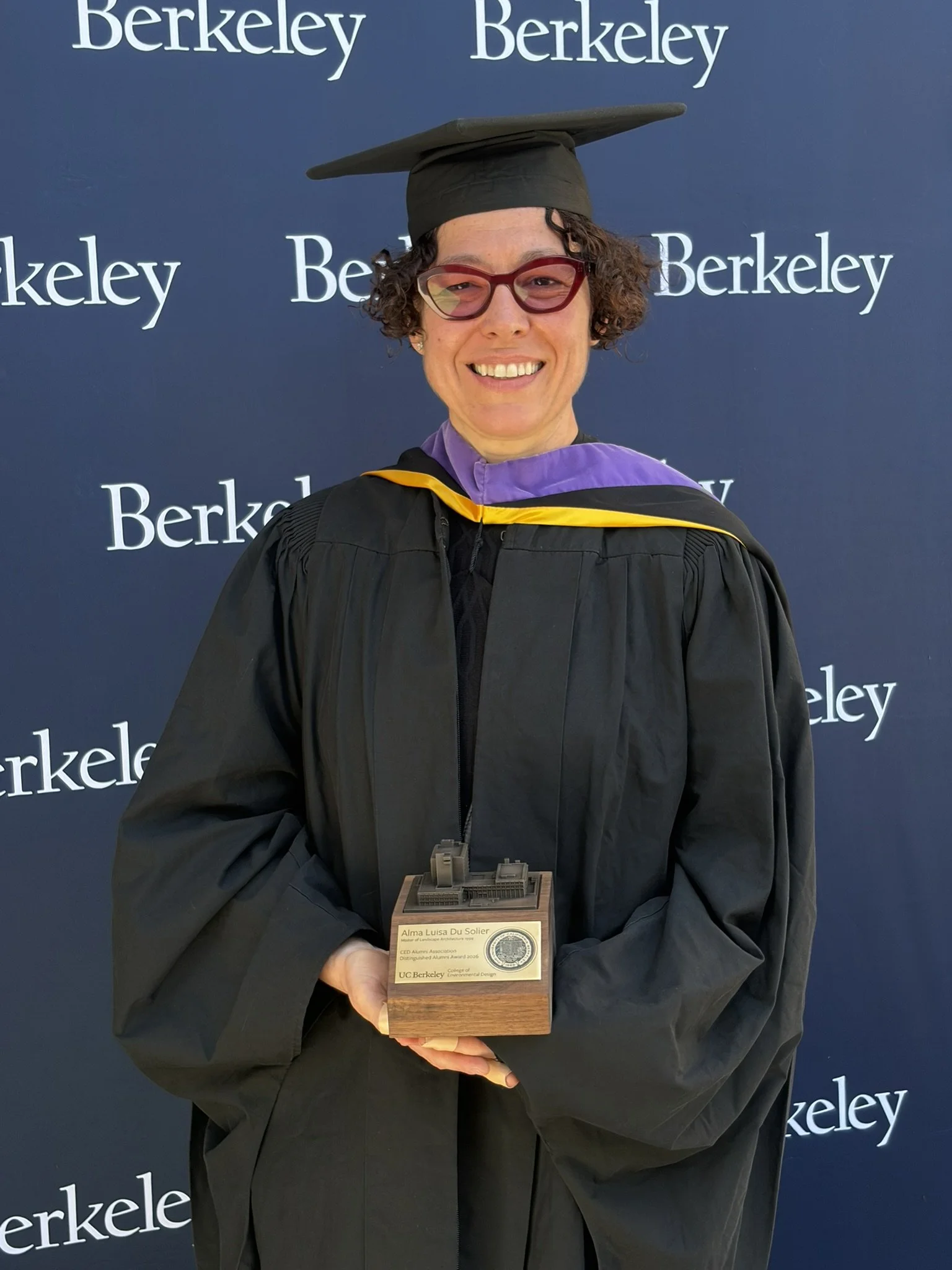
Alma’s recognition honors her decades of leadership in design, education, and mentorship.
PHOTOGRAPHY: Patricio Gutierrez Tommasi
NEWS
The Defender calls Houston’s Remembrance Park “a memorial and civic space designed to confront Houston’s history of racial violence whilee creating a place for reflection and community gathering.”
Wallpaper profiles Walter Hood, noting how the studio “is designing the ruins of the future”.
UC Berkeley College of Environmental Design honored alumna Alma Du Solier at the 2026 commencement for her outstanding public service.
In May, Lincoln Center broke ground on a transformative reimagining of the plaza gardens and a new theater. Hood Design Studio joined Center leadership and design partners Weiss/Manfredi and Moody Nolan at the event.
A 2026 CULT 100 awardee, Walter sat down with Cultured to discuss the studio, Italy, and To Sir, with Love.
In TIME, Walter shares the importance of the shotgun house as an American typology.